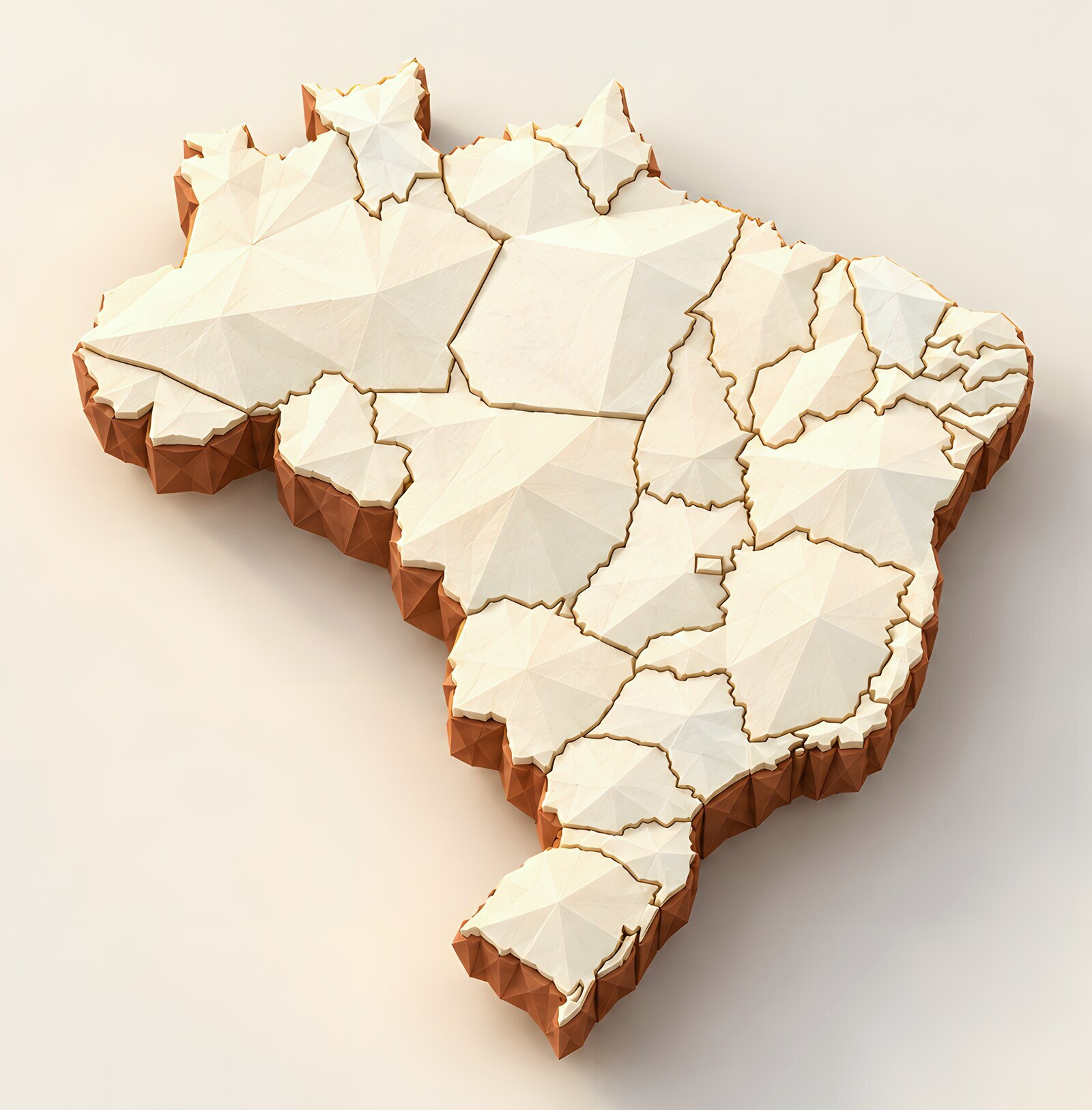
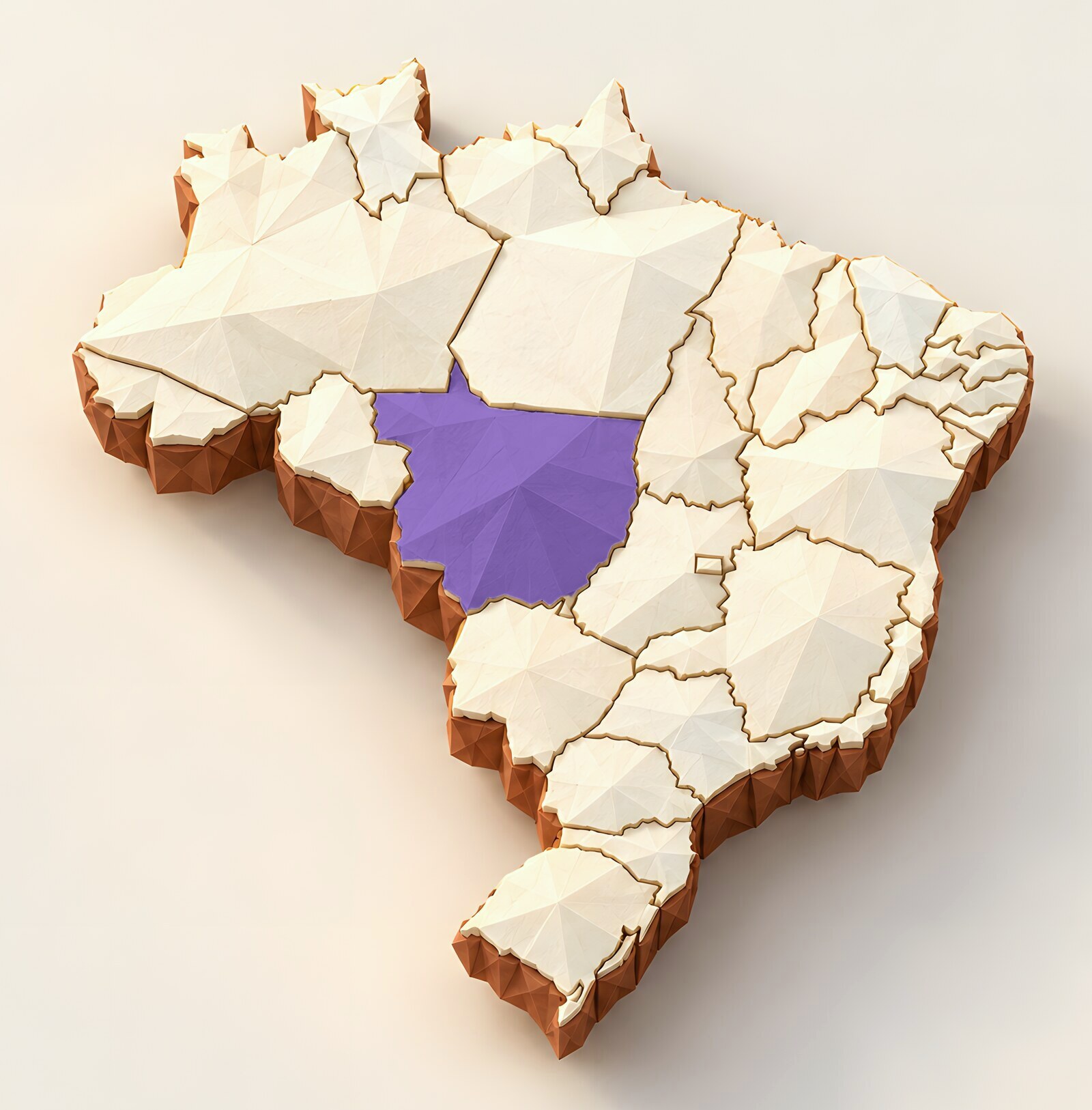
ALTO GARÇAS · MATO GROSSO · BRAZIL
One owned farm. Four sources of value. Carbon credits for you, for 35 years.
Forestry, carbon credits and agroforestry on 3,044 owned hectares.
 The idea
Japan's noble tree, grown in Brazil.
In Japan, kiri is so revered that its leaf and flower form the crest of the Japanese government. For centuries its wood has been chosen for the chests that guard silk kimonos. Brazil Kiri Farm brings this tree to a large owned property in Mato Grosso, to grow it at scale.
The tree on Japan's government crest, planted at scale in the heart of Brazil.
The treeFast to grow. Light, strong wood.
Kiri (Paulownia) is one of the fastest-growing trees in commercial forestry. Its wood is remarkably light for its strength and resists warping, which makes it a premium material for furniture, instruments and panels. The first harvest comes about six years after planting.
A fast-growing tree with premium wood, first harvested about six years after planting.
The land3,044 hectares. Already ours.
The farm sits in Alto Garças, Mato Grosso, in the heart of Brazil's agricultural west, and the land is already owned. Every real of the investment goes into the farm, with nothing spent on buying land. About 1,400 hectares of open area will be regenerated and planted, growing to some 2,435 hectares of plantation.
Owned land in Mato Grosso, so the capital goes straight into the forest.
Final planted area confirmed in technical and environmental review.
 The nursery
Every tree starts in our greenhouse.
The investment builds a greenhouse dedicated to kiri seedlings on the farm. Producing our own seedlings means full control over quality and over the pace of planting. Thousands of healthy plants, ready for the field, every season.
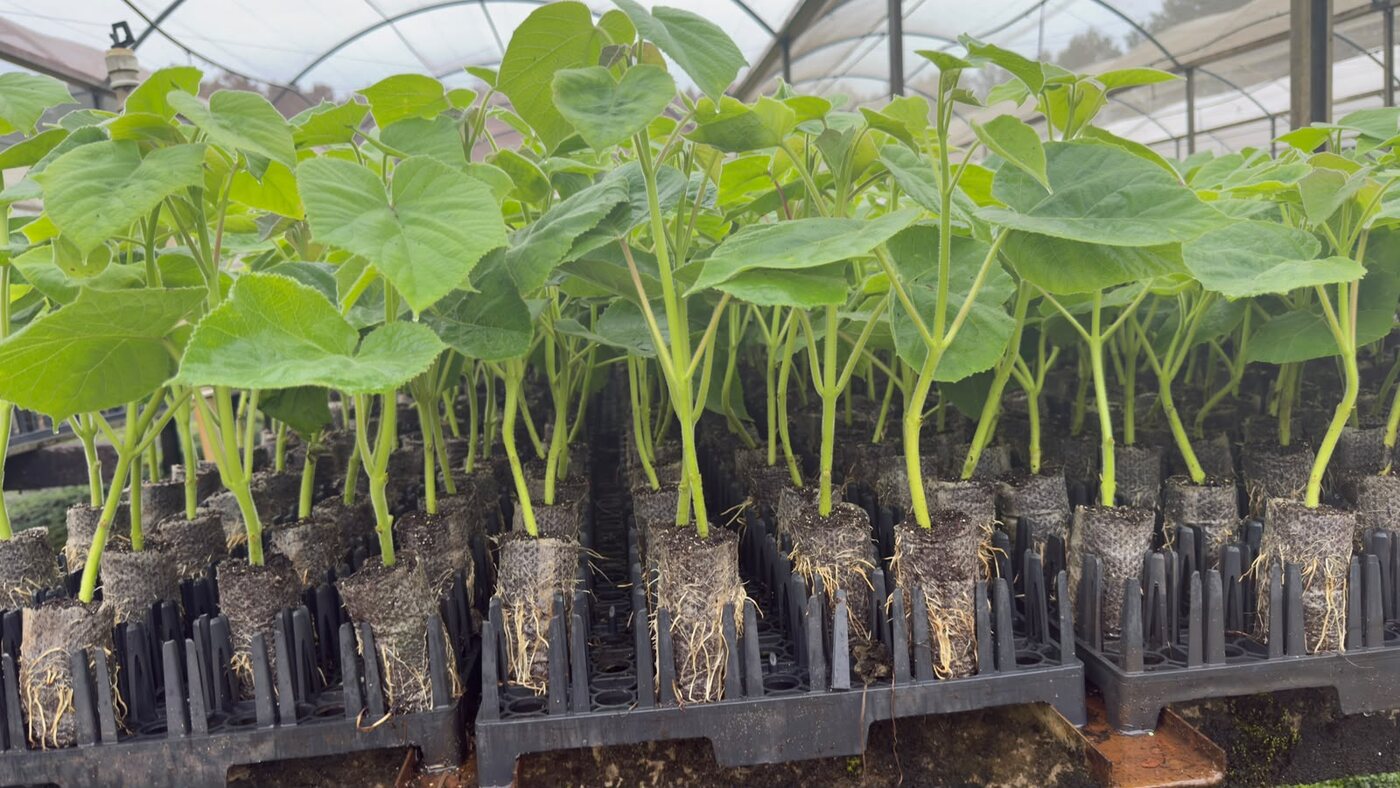
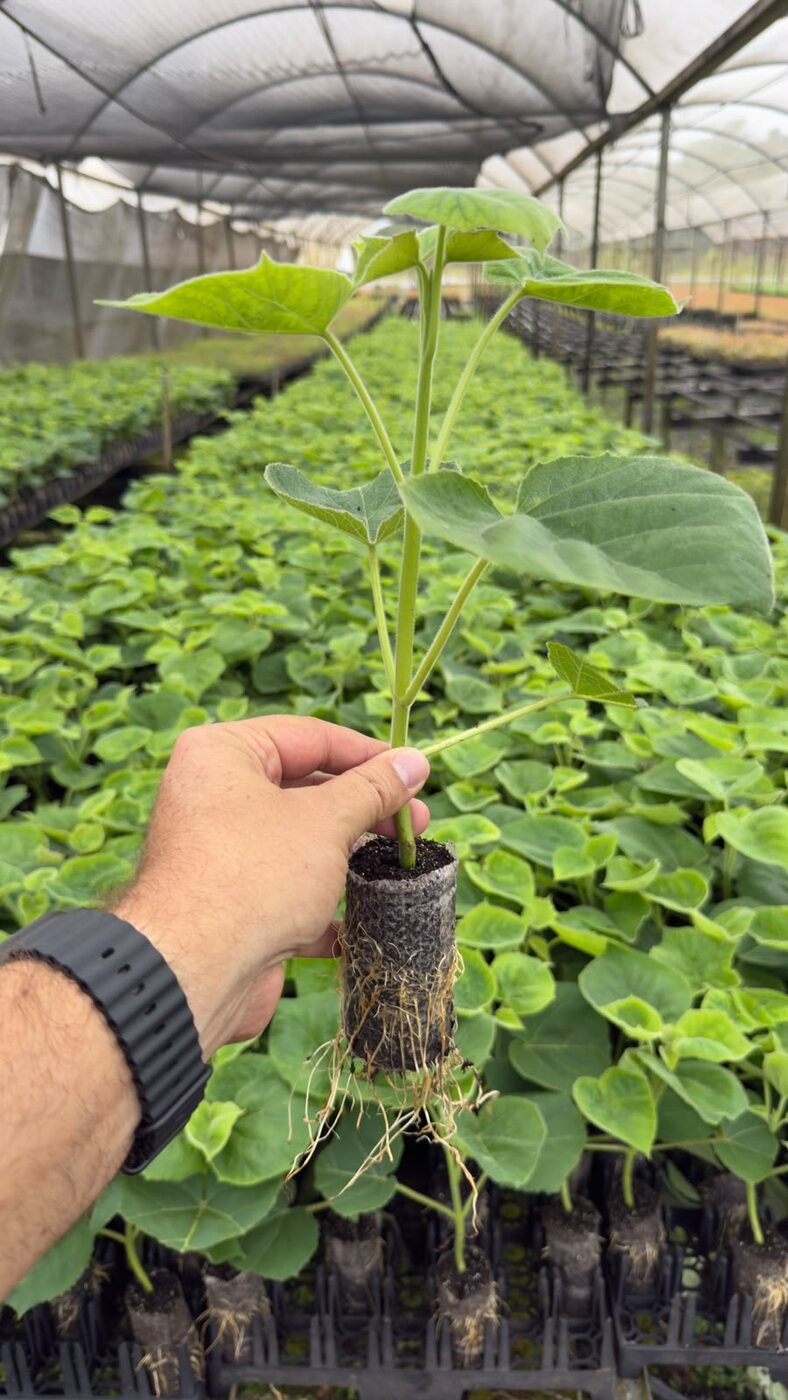
Reference images from Brazilian kiri farms
PlantingFrom seedling to forest.
The soil is prepared, the seedlings go into the ground and the rows take shape across the farm. A Brazilian team runs every step, from planting to irrigation and year-round care. Kiri is already grown commercially in Brazil, so we plant on proven ground.
A Brazilian team turns open land into kiri forest, row by row.
The businessOne farm. Four engines of value.
The same land produces carbon credits, premium timber, cacao and honey. The carbon credits go entirely to the investor; timber, cacao and honey are the operator's business. Every engine depends on the same thing: a healthy, thriving forest.
Carbon for the investor; timber, cacao and honey for the operator.
AgroforestryKiri, cacao and bees, working together.
Cacao grows in the shade between the kiri trees in each row, and beehives stand between the rows. The bees feed on the blossoms and pollinate the farm, while the mixed planting builds soil and biodiversity. Three harvests rise from every hectare instead of one.
Cacao between the trees and hives between the rows: three harvests per hectare.
The basicsWhat is a carbon credit?
One carbon credit is one tonne of carbon dioxide taken out of the atmosphere or kept out of it. It is measured, verified and recorded in a public registry by an independent standard. Companies with climate targets buy credits to balance emissions they cannot yet cut, and the most sought-after are removals, credits from trees and soil that pull carbon from the air.
From tree to creditHow a tree becomes a credit.
As kiri grows, it pulls carbon from the air and locks it into wood and soil. Our technical team measures that growth under an approved methodology, an independent verifier confirms it, and the registry issues the credits. Each issued credit is delivered to you.
- 01The forest absorbs CO₂
- 02The team measures growth and biomass
- 03An independent verifier confirms
- 04The registry issues the credits
- 05The credits are delivered to you
CarbonMore than 280,000 credits a year.
The project's completed feasibility study estimates 281,675 credits a year from four activities on the farm. Most of them come from removals, the category buyers pay the most for: in 2024, removal credits sold on average for 381% more than reduction credits. Every credit the project issues goes to you, for 35 years.
281,675 credits a year, all of them yours for 35 years.
Credits per year · preliminary estimate, subject to certification · Market data: Ecosystem Marketplace, 2025
TimberPremium timber, harvested again and again.
Kiri wood is light, easy to work and stable, and is used for furniture, plywood veneers, musical instrument soundboards, building components and even beehives. The forest is managed in successive cycles: it is harvested, it regenerates and it is harvested again, with the first harvest about six years after planting. Thousands of hectares of kiri make timber a major business for GreenCarbon.
Light, stable, premium wood, harvested in cycles from year six.
Timber revenue belongs to the operator. Cycle length set by forestry assessment.
Timber productsFrom log to board, panel and pellet.
One harvest becomes several products: logs, sawn boards, panels and pellets. What the sawmill does not use returns to the soil as biochar, adding to the farm's carbon.
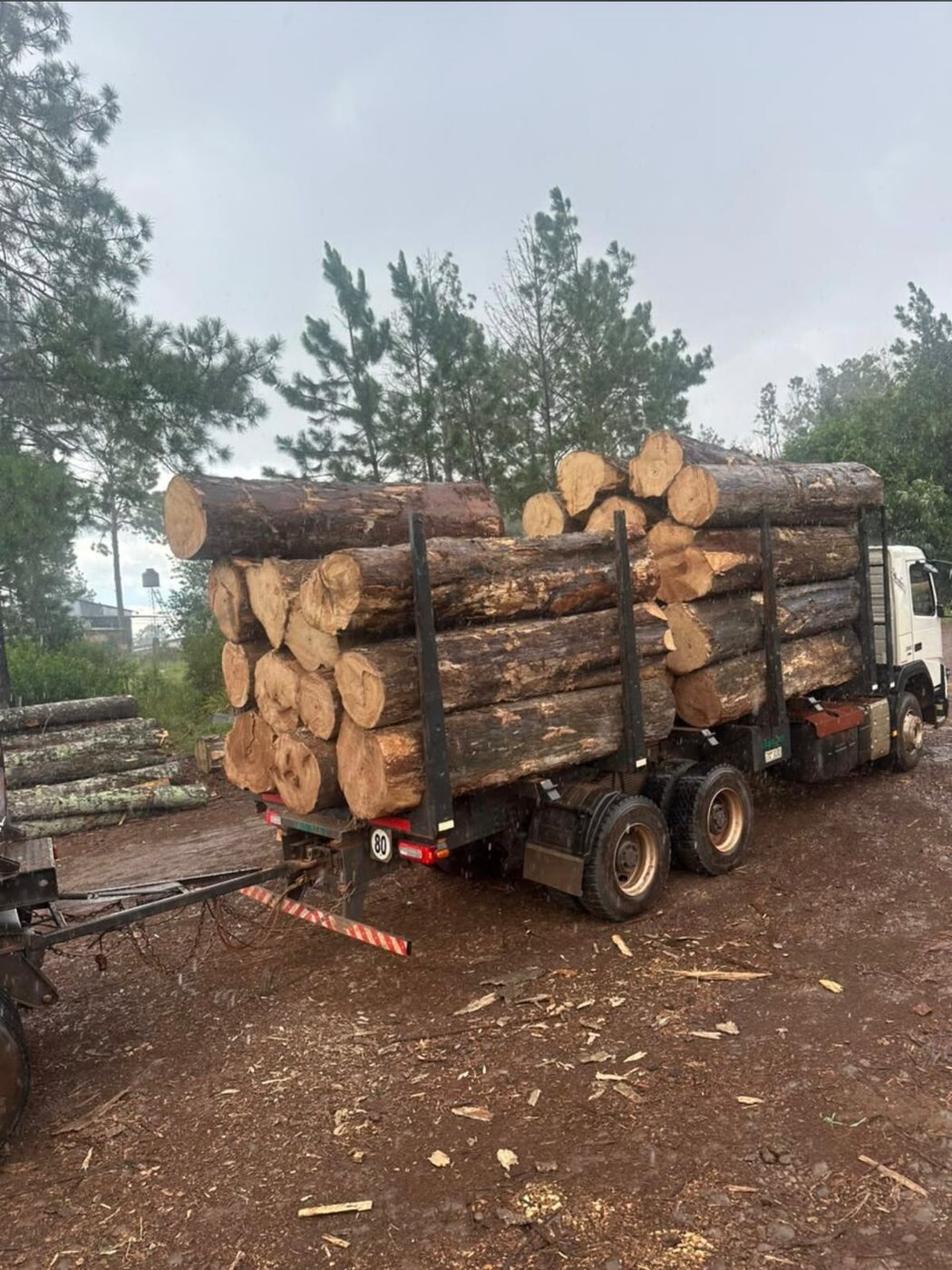
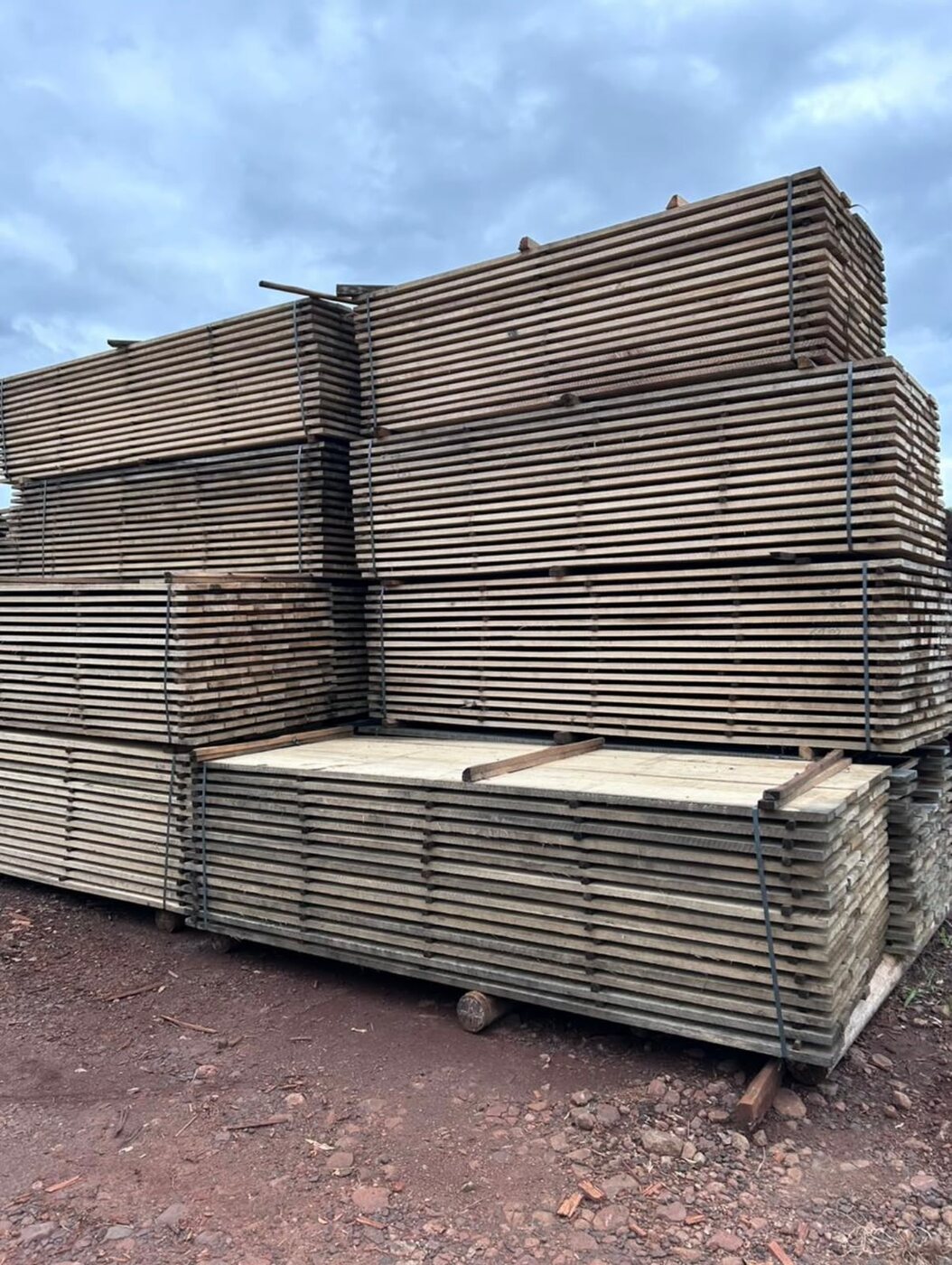
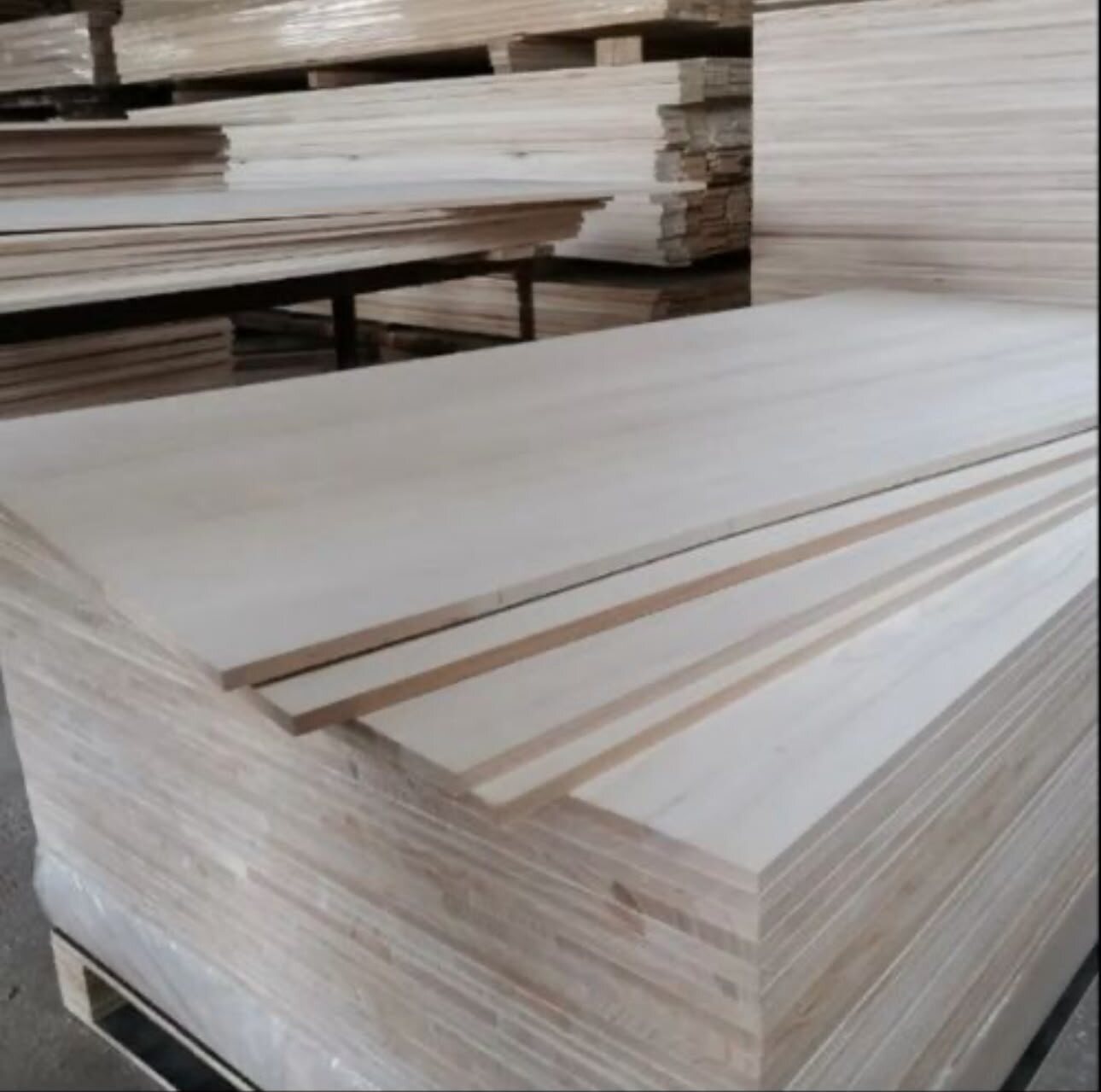
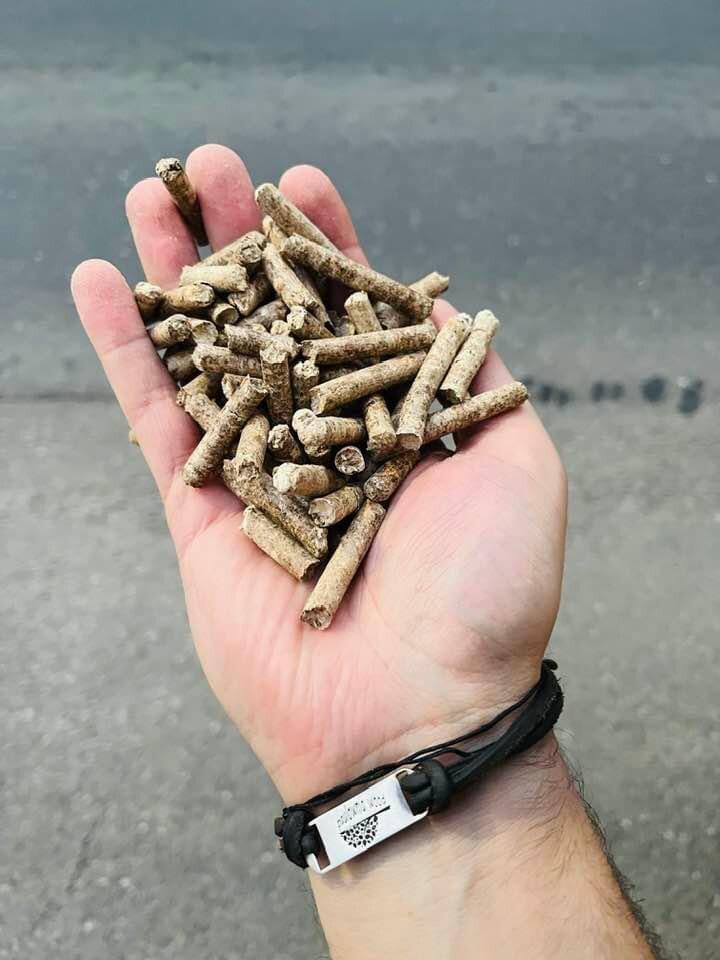
Reference images from Brazilian kiri farms
Cacao & honeyCacao and kiri blossom honey.
The cacao grown between the kiri is fermented, dried and sold as beans to the chocolate market, a market that reached record prices in 2024 after the largest global supply deficit in over 60 years. The hives between the rows produce kiri blossom honey, and Brazilian honey export prices rose 29% in 2025. Both harvests belong to GreenCarbon and grow on the same hectares as your carbon.
Cacao beans for the chocolate market and kiri blossom honey, harvested between the rows.
Cacao and honey revenue belongs to the operator. Market data: ICCO, Bloomberg, Abemel/Datamar.
The partnershipYour capital. Your carbon. For 35 years.
The investor funds the planting and the carbon project and receives 100% of the carbon credits the project issues, for 35 years. GreenCarbon brings the land, the team and the operation, and earns from timber, cacao and honey. Each partner is paid by a different harvest of the same forest.
BRL 350 million for 100% of the project's carbon credits over 35 years.
The investor
InvestsBRL 350 million (≈ USD 69.3M · EUR 61.9M)
Receives100% of the carbon credits issued and attributable to the project, for 35 years
GreenCarbon · operator
BringsThe land, the team and the operation
EarnsTimber, cacao and honey
Why it lastsA partner with three businesses here.
Timber, cacao and honey give GreenCarbon its own strong income from this land, every year. An operator that earns this much from a forest takes care of it, season after season. That care is what keeps your carbon growing for 35 years.
Three profitable businesses keep the operator invested in the forest for the long run.
- 01Owned landThe operator is not going anywhere
- 02Own revenueTimber, cacao and honey every year
- 03Shared goalA healthy forest pays both partners
Use of fundsEvery real goes into the farm.
With the land already owned, the investment goes into planting, infrastructure and the carbon project. It also builds the greenhouse, the guest village and the rest square. The detailed budget and disbursement schedule are built together with the investor during due diligence.
- 01Soil preparation
- 02Seedlings, planting and the greenhouse
- 03Irrigation
- 04Machinery and equipment
- 05Team, management and maintenance
- 06Technical monitoring
- 07Carbon certification
- 08Guest village and rest square
- 09Administration
CertificationBuilt for Verra or Gold Standard.
The project is designed to certify under one of the two leading global standards, Verra VCS or Gold Standard, and the investor can state a preference. The carbon feasibility study is already complete. From here, five phases take the farm from due diligence to issued credits.
- 01Due diligence and technical plan
- 02Investment structuring
- 03Plantation establishment
- 04Methodology, validation and registration
- 05Monitoring, verification and issuance
Your appWatch your investment grow, live.
Cameras at strategic points of the farm stream 24 hours a day to an app made only for our investors. From Dubai or anywhere, you follow planting, growth and certification as they happen. Periodic technical reports complete the picture.
24/7 cameras and an exclusive investor app, from anywhere in the world.
Illustrative screens.
Live cameras
Growth
of 2,435 ha · +38 ha this month
The villageYour home inside the forest.
The investment builds a guest village on the farm, with chalets of kiri wood around a koi pond. Our investors are welcome to stay and see their forest with their own eyes.
Kiri-wood chalets around a koi pond, built for our investors' visits.
Concept image.
The rest squareRest in the shade of kiri.
A square planted with kiri trees, with Chinese benches and hammocks in their shade. Beside it, a crystal-clear koi lake fed by the river that runs through the farm.
Hammocks in the kiri shade, beside a koi lake fed by the farm's river.
Lago de GarçasA crystal lake, fed by our river.
Next to the village and the rest square lies Lago de Garças, a natural lake of clear water fed by the river that runs through the farm. Stones, a sandy shore and a wooden deck invite you in, and herons fish along the edge. It is the place where every visit ends.
A natural crystal lake with a sandy shore, a wooden deck and herons.
The planDesigned as part of the forest.
The architect's model brings the chalets, the rest square and the lakes together in one place inside the plantation. It is built with the investment and grows with the farm.
Concept model.
Due diligenceReady for your due diligence.
The groundwork is done: the land, its records and the carbon study are ready to be reviewed. The detailed budget, the financial model and the contract terms are built together with you, during due diligence. You shape the final project.
Land, records and carbon study ready; budget and terms built with you.
Ready
- 3,044 owned hectares
- Property registry, CAR and environmental records
- Completed carbon feasibility study
- Certification route: Verra VCS or Gold Standard
Built with you
- Detailed budget and disbursement schedule
- Financial model
- Final planted area
- Methodology
- Delivery and governance terms
Next stepsFour steps to your forest.
We start with a confidential conversation and a visit to the farm. From there, the budget, the model and the contracts move forward together.
A confidential conversation, a visit to the farm, then contracts.
- 01Sign a confidentiality agreement
- 02Review the property records and the carbon study
- 03Visit the farm in Alto Garças
- 04Build the budget, the model and the contracts together
Come and see it grow.
BRAZIL KIRI FARM · GREENCARBON · PORTO VELHO, RONDÔNIA, BRAZIL
Brazil Kiri Farm